






 In today’s fast-changing professional environment, Agile skills have become highly valuable across industries. Organizations are increasingly adopting Agile frameworks to improve productivity, collaboration, and project delivery speed. Because of this shift, certifications related to Scrum and Agile are in high demand.



What is CSM Certification?
The Certified Scrum Master certification is a globally recognized credential that validates a professional’s understanding of Scrum principles and Agile practices. Offered by Scrum Alliance, the certification focuses on helping professionals understand how Scrum teams collaborate and deliver products efficiently.
The certification teaches candidates how Scrum works in practical project environments and how Agile teams adapt to changing business requirements. It also helps professionals develop skills needed to guide teams through complex projects and organizational changes.
As companies continue investing in Agile transformation, the demand for professionals who understand Scrum practices continues to grow. Certified professionals are often preferred because they demonstrate structured knowledge of Agile methodologies and team collaboration.
What Does the Certified Scrum Master Course Cover?
The certified scrum master course is designed to help professionals understand the practical implementation of Scrum and Agile principles. The training usually lasts two days and is conducted by a Certified Scrum Trainer.
The course covers:
- Scrum values and Agile principles
- Team collaboration techniques
- Scrum roles and responsibilities
- Sprint planning and execution
- Scrum events and ceremonies
- Agile project workflows
A major focus of the course is understanding the Fundamentals of Scrum, including empirical process control, iterative development, transparency, and continuous improvement.
The training also prepares candidates for the certification assessment through practical discussions and exercises related to Certified Scrum Master exam explained concepts. By the end of the course, candidates develop the confidence required to apply Scrum practices in real project environments.
What Skills Do You Learn in the CSM Course?
The certification program helps professionals develop several important Agile and leadership skills.
Some of the key skills include:
Agile Leadership
Candidates learn how to guide teams, support collaboration, and facilitate Agile workflows effectively.
Sprint Facilitation
The course teaches professionals how to organize and manage Sprint activities, reviews, and retrospectives.
Backlog Management
Participants understand how teams prioritize tasks and manage product requirements efficiently.
Communication and Collaboration
The certification improves communication skills, helping professionals coordinate effectively with stakeholders and development teams.
Problem-Solving Skills
Candidates learn how to identify obstacles and remove impediments that may affect team productivity.
These practical skills help professionals become more effective Scrum practitioners and improve their contribution to Agile projects.
Also Read: Scrum Master Role in Implementing CSR in US Organizations
Is CSM Certification Worth It for Career Growth?
For many professionals, the answer is yes. The certification offers multiple career advantages and helps individuals build a strong foundation in Agile project management.
Better Career Opportunities
Organizations implementing Agile frameworks actively seek professionals who understand Scrum methodologies. Certified professionals are often considered more reliable for Agile project roles.
Higher Demand for Scrum Professionals
The increasing adoption of Agile frameworks across industries has created a strong demand for experienced Scrum Masters and Agile practitioners.
Global Recognition
Because the certification is recognized internationally, professionals can pursue opportunities in multiple countries and industries.
Agile Leadership Development
The certification improves leadership and facilitation abilities, helping professionals guide Agile teams more effectively during organizational Agile transformation initiatives.
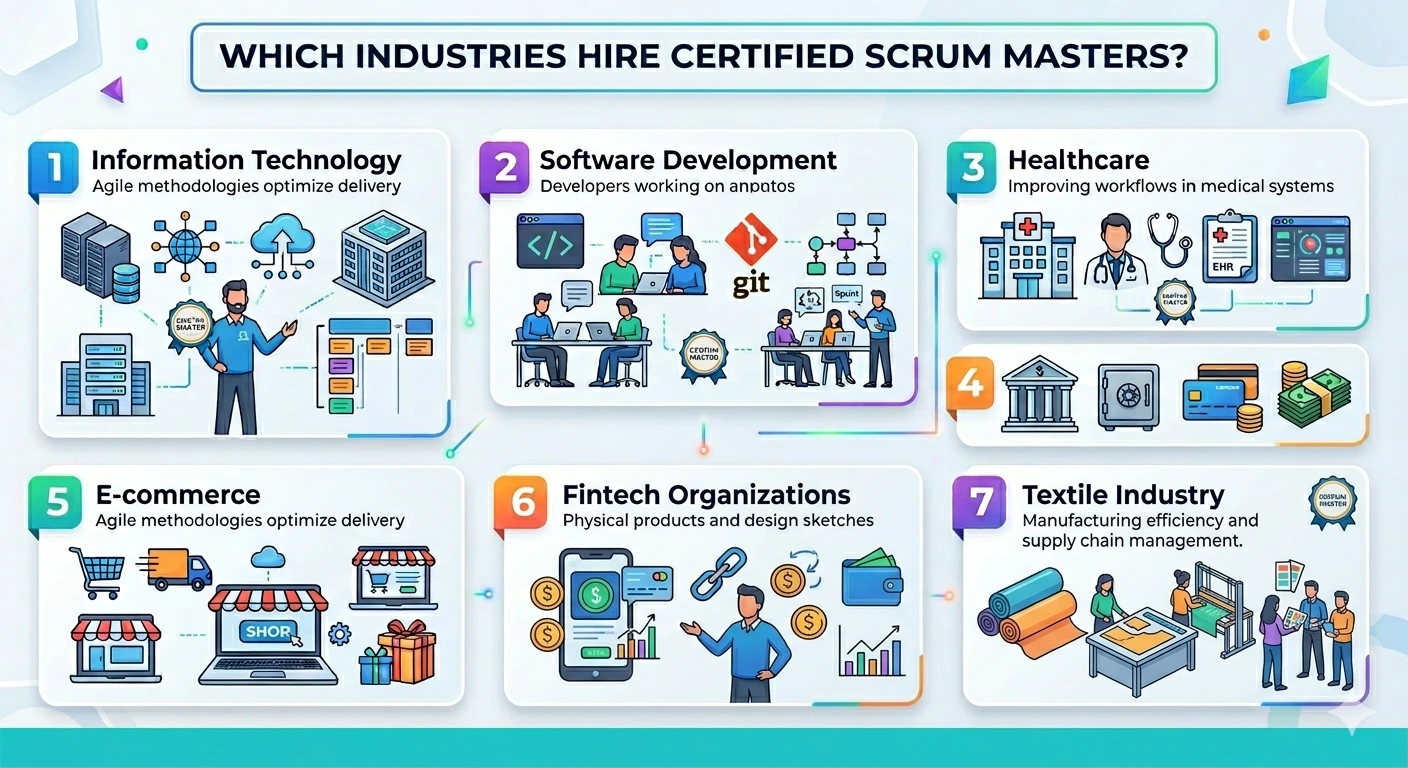
Which Industries Hire Certified Scrum Masters?
Today, Agile methodologies are used in a wide range of industries beyond software development.
Industries actively hiring Scrum professionals include:
- Information Technology
- Software Development
- Healthcare
- Banking and Financial Services
- E-commerce
- Product-Based Companies
- Fintech Organizations
As Agile adoption expands globally, the need for experienced Scrum Masters continues to increase across both technical and non-technical sectors.
What is the CSM Certification Salary in 2026?
One of the main reasons professionals pursue Scrum certifications is the attractive salary potential in Agile roles.
Estimated average salary ranges for certified professionals in 2026 include:
| Country | Average Salary Range |
| India | ₹10 LPA – ₹25 LPA |
| United States | $95,000 – $135,000 |
| United Kingdom | £60,000 – £90,000 |
| Australia | AUD 110,000 – AUD 150,000 |
Salary levels vary depending on experience, industry, company size, and project responsibilities. Professionals with strong Agile expertise and leadership skills often earn higher compensation packages.
How Much Does CSM Certification Cost in 2026?
The cost of certification depends on the training provider, location, and training format. In most cases, the course fee includes both training and exam access.
Typical estimated cost ranges in 2026 include:
| Country | Approximate Cost |
| India | ₹25,000 – ₹40,000 |
| United States | $800 – $1,400 |
| United Kingdom | £700 – £1,100 |
| Canada | CAD 900 – CAD 1,300 |
| Australia | AUD 1,200 – AUD 1,700 |
These costs usually include instructor-led training, study materials, and exam attempts.
How Long is CSM Certification Valid?
The certification remains valid for two years from the date of issue.
To maintain active certification status, professionals must:
- Earn 20 Scrum Education Units (SEUs)
- Pay the renewal fee
- Submit renewal information through Scrum Alliance
As of 2026, the renewal fee generally remains around $100 for renewal cycles.
Maintaining active certification helps professionals stay updated with evolving Agile practices and industry trends.
Why Companies Prefer Certified Scrum Masters?
Organizations increasingly prefer certified professionals because they help teams implement Agile frameworks more effectively.
Certified professionals contribute to:
Improved Team Collaboration
Scrum practices encourage transparency and communication among team members.
Faster Product Delivery
Agile workflows help teams deliver working products more efficiently.
Better Adaptability
Organizations undergoing Agile transformation require professionals who can guide teams through changing processes.
Increased Productivity
Scrum methodologies help teams focus on priorities and continuous improvement.
These benefits make certified Scrum professionals valuable assets for modern organizations.
What Are the Challenges of Becoming a Scrum Master?
Although the certification offers strong career advantages, becoming a successful Scrum professional also involves certain challenges.
Continuous Learning
Agile methodologies continue evolving, requiring professionals to stay updated with industry trends and best practices.
Team Management Responsibilities
Scrum professionals must manage communication, collaboration, and conflict resolution within teams.
Real-World Implementation
Applying Scrum practices effectively in large organizations can sometimes be more complex than theoretical learning.
Understanding these challenges helps professionals prepare realistically for Agile careers.
Who Should Take the CSM Certification?
The certification is suitable for professionals from both technical and non-technical backgrounds.
Ideal candidates include:
- Software developers
- Project managers
- Team leads
- Product managers
- Business analysts
- QA professionals
- Fresh graduates entering Agile careers
Anyone interested in learning Agile project management and Scrum practices can benefit from the certification.
How Can You Pass the CSM Exam Successfully?
Preparing effectively can improve your chances of passing the certification exam on the first attempt.
Study the Scrum Guide
Understanding Scrum values, roles, and events is essential.
Participate Actively During Training
Instructor-led discussions and practical examples help reinforce learning.
Practice Mock Questions
Mock tests improve familiarity with the exam structure and question patterns.
Review Real-World Scrum Examples
Practical understanding helps candidates apply Scrum concepts more effectively.
The training sessions usually include sections related to Certified Scrum Master exam explained, helping candidates understand how questions are structured and what topics are commonly tested.
Final Verdict – Is CSM Certification Worth It?
For professionals interested in Agile careers, the certification remains highly valuable in 2026. It provides foundational knowledge of Scrum practices, improves leadership capabilities, and helps professionals contribute effectively to Agile teams.
The certification is especially beneficial for individuals interested in working as Scrum Masters, Agile Coaches, or project leaders in organizations implementing
Agile frameworks.
With growing industry demand, competitive salary opportunities, and increasing adoption of Agile methodologies worldwide, the certification continues to be a worthwhile investment for long-term career growth.
For professionals planning to participate in organizational Agile transformation initiatives and build expertise in Agile project management, obtaining Scrum certification can be an important step toward professional success.
Frequently Asked Questions (FAQs)
1. Is CSM certification good for beginners?
Yes, the CSM certification is beginner-friendly and suitable for professionals who are new to Agile and Scrum methodologies.
2. Does CSM certification require coding knowledge?
No, coding skills are not mandatory. Professionals from technical and non-technical backgrounds can pursue the certification.
3. Is CSM certification in demand in 2026?
Yes, CSM certification remains highly in demand in 2026 as organizations across industries continue adopting Agile methodologies. Companies actively look for certified Scrum professionals who can improve team collaboration, project delivery, and Agile implementation.
4. Can freshers take the CSM certification?
Yes, fresh graduates interested in Agile careers can take the certification to improve their job opportunities.
5. How difficult is the CSM exam?
The exam is considered moderately easy if candidates actively attend training sessions and study Scrum concepts thoroughly.
6. Is CSM certification recognized globally?
Yes, the certification is internationally recognized and valued across multiple industries.
7. What jobs can you get after CSM certification?
Common roles include Scrum Master, Agile Coach, Project Coordinator, Product Owner, and Agile Project Manager.
8. How long does it take to complete CSM certification?
Most training programs are completed within two days, followed by the online certification assessment.
9. Can CSM certification increase salary?
Yes, certified professionals often receive better salary opportunities because of growing industry demand for Agile expertise.
10. Is renewing the CSM certification necessary?
Yes, professionals must renew their certification every two years to maintain active status and stay updated with Agile practices.