








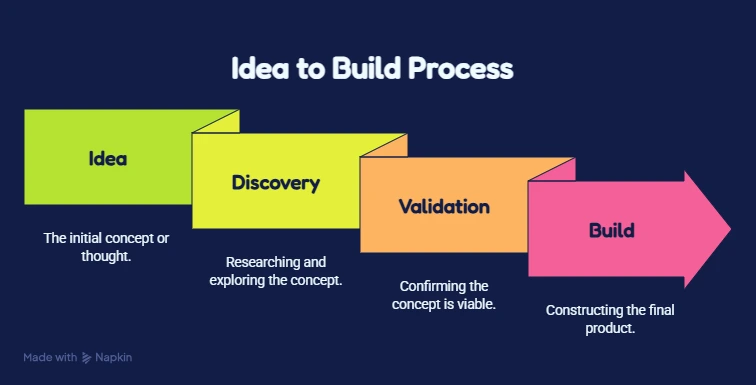
Product Discovery Methods are the structured research and validation techniques teams use to understand user problems before building a solution. They include user interviews, surveys, usability testing, opportunity mapping, and data analysis — all aimed at reducing the risk of building something nobody wants.
Most failed products don't fail because of bad code — they fail because teams built the wrong thing for the wrong person. That's the gap this kind of discovery closes. Instead of guessing, teams can talk to users, test assumptions cheaply, and commit engineering time once there's real evidence.
What Are Product Discovery Methods, Exactly?
There are qualitative and quantitative techniques that test whether a problem is real and worth solving, and whether a proposed solution will work. They sit at the front of the product process, before any design or engineering sprint begins.
Why Product Discovery Matters
Without discovery, teams operate on assumptions. A feature might look good on a Product roadmap but fail because no one asked real users if they needed it.
Core Principles Behind Every Method
Every technique shares three principles: talk to real users, test the smallest version of an idea, and measure behavior, not opinions.
Discovery and delivery work differently, and mixing them up is where most teams stumble:
-
Discovery asks: Is this problem worth solving? Delivery asks: Is this feature built correctly?
-
Discovery uses: interviews, surveys, and prototypes. Delivery uses: sprints, tickets, and QA.
-
Discovery output: validated learning. Delivery output: shipped product.
-
Discovery happens: continuously. Delivery happens: after discovery is done.
What Are the Different Types of Discovery Techniques?
The main types fall into two buckets: qualitative methods that explain "why," and quantitative methods that reveal "what" and "how many." Strong discovery processes combine both, instead of relying on one alone.
Qualitative Discovery Methods
These uncover motivation and context. Examples include user interviews, contextual inquiry (watching users in their real environment), and concept testing with clickable prototypes. This style of research is ideal early on, when the problem itself is still unclear.
Quantitative Discovery Methods
These validate scale and patterns using surveys, A/B tests, funnel analysis, and usage analytics. They answer whether a problem seen in five interviews affects five thousand users.
|
Method |
Type |
Best For |
|
User Interviews |
Qualitative |
Understanding the root problems |
|
Surveys |
Quantitative |
Validating the scale of a problem |
|
Usability Testing |
Qualitative |
Testing if a solution works |
|
A/B Testing |
Quantitative |
Comparing two solutions |
|
Opportunity Mapping |
Qualitative |
Prioritizing what to solve |
|
Analytics Review |
Quantitative |
Spotting behavior patterns |
How Do You Choose the Right Product Discovery Method?
Choose a method based on your stage of uncertainty: use qualitative research when the problem is unclear, and quantitative research once you need to confirm scale or measure impact. The right pick depends on what you already know and the decision you're making.
Factors That Should Guide Your Choice
Consider how much you already know, how much time you have, and how risky the decision is. Comparing a few Product Discovery Methods side by side before committing usually saves time.
Matching Methods to the Product Stage
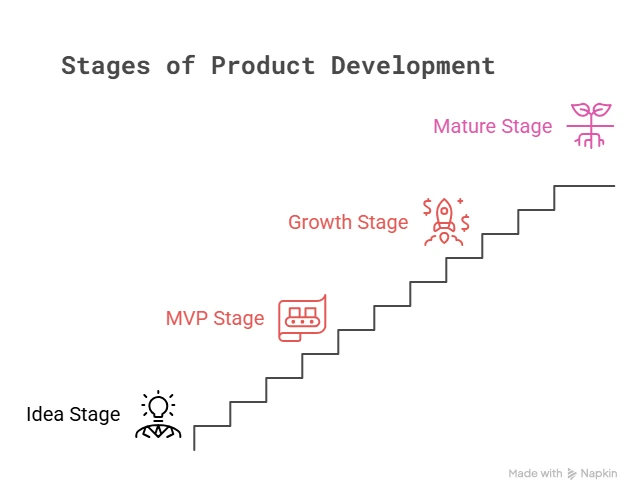
Early-stage ideas need problem discovery. Mid-stage products need solution validation. Mature products need optimization discovery to find friction in the existing experience. Applying the right method at each stage keeps effort focused instead of scattered.
-
Idea stage: use user interviews to confirm that a problem exists.
-
MVP stage: use prototype testing to validate the solution direction.
-
Growth stage: use A/B testing and analytics to optimize adoption and retention.
-
Mature stage: use continuous feedback loops to catch friction before it causes churn.
What Are the Key Benefits of Discovery Methods?
The biggest Product Discovery Methods benefits are reduced build risk, faster time-to-market, and stronger product-market fit. Teams that run structured discovery ship fewer unused features and spend less time on rework.
Business-Level Benefits
One of the clearest Product Discovery Methods benefits is cost savings — catching a flawed idea in a two-day interview round is cheaper than catching it after a full sprint. Discovery also improves stakeholder alignment, since decisions rest on evidence, not opinion. Across both the business and team side, Product Discovery Methods benefits tend to show up fastest in the first quarter a team commits to the habit.
Team and Customer-Level Benefits
For teams, one of the underrated Product Discovery Methods benefits is morale — engineers feel confident they're building something meaningful, not a guess. For customers, it means a product that solves their problem, which drives retention. CB Insights has repeatedly found "no market need" among the top reasons startups fail — the exact gap this research closes.
-
Reduced build risk → fewer scrapped or unused features.
-
Faster decisions → less back-and-forth in planning.
-
Better product-market fit → higher adoption and retention.
-
Stronger team confidence → less rework and higher morale.
What Are the Common Uses of Product Discovery Methods?
The most common uses are validating new feature ideas, testing pricing and positioning, uncovering usability issues, and prioritizing a backlog by real user impact. These uses span startups and enterprise teams alike.
Uses in Early-Stage Startups
One of the clearest uses of Product Discovery Methods here is testing if a business idea has real traction before writing a single line of code. A team might run five customer interviews and a Maze prototype test in a week — cheap enough that killing a bad idea costs a few days, not a quarter.
Use in Established Product Teams
In larger teams, one of the more common uses of Product Discovery Methods is optimizing what already exists — running usability tests on a checkout flow, or A/B testing onboarding screens to reduce drop-off.
-
New feature validation — interviews plus prototypes lead to a clear go/no-go decision.
-
Pricing research — surveys plus willingness-to-pay tests inform pricing tier decisions.
-
Onboarding optimization — A/B testing reduces drop-off rates.
-
Backlog prioritization — opportunity mapping produces a ranked feature list.
What Tools Support Product Discovery Methods?
Most teams stitch together three or four named tools rather than one all-in-one platform. Dovetail tags recurring themes across interview transcripts. Maze runs unmoderated prototype tests in a day instead of scheduling a week of calls. Amplitude shows what users do once a feature ships, catching drop-offs a survey would miss.
Research and Interview Tools
Calendly handles the scheduling grind, while Dovetail and Grain record and transcribe calls, then tag recurring quotes so a pattern across 15 interviews is visible in an afternoon instead of buried in raw notes.
Analytics and Prioritization Tools
Amplitude and Mixpanel track behavior at the event level. Product Board turns interviews and analytics findings into a ranked opportunity list, so prioritization gets argued with data instead of whoever's loudest in the planning meeting.
-
Interview platforms — schedule and record user calls to capture qualitative insight.
-
Prototyping tools — build testable mockups to validate a solution early.
-
Analytics platforms — track usage patterns to spot friction points.
-
Survey tools — collect large-scale feedback to validate problem size.
What Mistakes Should You Avoid in Product Discovery?
The most common mistake is skipping discovery under deadline pressure — and the second is asking questions like "would you use a feature that does X?", which almost always gets a polite yes regardless of real intent. Both quietly raise the risk discovery was meant to reduce.
Process-Level Mistakes
Slack's early pivot is a textbook example: the team was building a game, not a chat tool, and found the real opportunity only by watching how internal teams used their side project. Most teams stop after two friendly interviews and call it validated, or build exactly what one loud customer asked for instead of digging into the problem behind the request.
Team-Level Mistakes
Discovery run by one PM in a personal doc, never shared past a Friday standup update, loses credibility fast. Findings need to live where the whole team can check — a shared Dovetail workspace beats a slide nobody reopens.
-
Skipping discovery to save time → run lightweight discovery even under tight deadlines.
-
Asking leading questions → ask open-ended, neutral questions instead.
-
Treating one interview as proof → looking for patterns across 5–8 conversations.
-
Keeping insights siloed → sharing findings across the whole team.
Quick Answers on Product Discovery Methods
-
What is the goal of discovery? To confirm a problem is real and worth solving before building.
-
How long should discovery take? Anywhere from a few days to a few weeks, depending on risk.
-
Who should run it? Product managers, typically alongside design and engineering input.
Final Thoughts
Product Discovery Methods aren't a one-time checklist — they're an ongoing habit that separates loved products from abandoned ones. Pick one method that fits your stage, and build the habit of validating before you build. If you want a more formal grounding in this way of working, a CSPO Certification covers how discovery fits into the wider product owner role, from backlog decisions to stakeholder alignment.