


DevOps Course Online With Gen AI & Job Assistance
 100% Placement Assistance


-
 DevOps Course curated with Generative AI Tools
-
Beginner to Advance Level DevOps Training Placement Support with 400+ Hiring Partners
-
This course is best suited for freshers, IT or Non IT and those who want to start career in DevOps
-
Learn DevOps online from experts with 10+ years industrial experience and learn tools like Git, Jenkins, and Docker
-
Enhance your DevOps expertise and future-proof your career with AI-driven workflows

Key Features
-
 Learn DevOps with Gen AI
-
150+ Hours of live instructor-led training
-
100+ Hours of Practical Assignments
-
Access to Dedicated Job Opportunities via Exclusive WhatsApp Channel (Self-Apply)
-
Expert Career Services to Help You Land a Job
 Learn DevOps with Gen AI
-
Assured Minimum Package 5-25 LPA
-
3 Capstone Projects
-
Dedicated Mentor for Instant Doubt Clarification
-
4 Months Internship Certificate
Significant Demand Growth











Cloud Engineer roles
Career Transformation



Testimonials
Let's walk you through the journey at StarAgile


- Module 1
- Module 2
- Module 3
- Module 4
- Module 5
- Module 6
- Module 7
- Module 8
- Module 9
- Module 10
- Module 11
- Module 12
- Module 13
- Module 14
- Module 15
Software Engineering Fundamentals
• Evolution of Software Engineering
• Monolithic vs Microservices
• SDLC Overview
• Enterprise Technology Stacks
Networking Fundamentals
• OSI Model
• TCP/IP Model
• DNS
• HTTP vs HTTPS
• Ports & Protocols
• Load Balancing
• Reverse Proxy
• CDN Concepts
APIs & Distributed Systems
• REST APIs
• JSON Fundamentals
• Authentication Basics
DevOps Foundations
• DevOps Evolution
• DevOps Lifecycle
• CI/CD Overview
• Platform Engineering Overview
Guided Labs & Interactive Exercises
• API Testing
• Network Simulations
• Architecture Design Exercises


- Profile and Resume building
- Business Communication
- Competency Test
- Mock Interviews
- Profile and Resume building
- Portfolio Building
- Build highly optimized Resumes and Cover Letters
- Build your LinkedIn Profile






Choose the plan that fits you best!
| Training + Placement Assistance | Microsoft + TIH - IIT Patna | |
|---|---|---|
| 150+ Hours of Live Instructor-Led Training |

|
|
| 100+ Hours of Hands-on Practical Assignments |
|
|
| Expert Career Services to Help You Land Your Dream Job |
|
|
| 3 Real-World Capstone Projects |
|
|
| Dedicated Mentor for Instant Doubt Resolution |
|
|
| 6-Month Internship Certificate |
|
|
| Course Completion Certificate from StarAgile |
|
|
| Placement Assistance |
|
|
| Microsoft Certification* |

|
|
| Certification from TIH-IIT PATNA* |
|
|


Upcoming DevOps Training Batches

Currently, we don't have any batch scheduled in your region.
You can request a new batch on your preferred date!



The work force is your asset. Up-Skill them with our Corporate Training Programs!
-
Unleash In-Demand Skills Across the Enterprise
-
Align Skill Development with Business Objectives
-
Drive Increased Employee Productivity
-
Leverage Immersive Learning
DevOps Course Training Overview
A DevOps course helps candidates receive training to combine software development and IT operations through the use of streamlined processes and tools. Trainees can learn essential skills, including infrastructure automation, cloud platforms (AWS, Azure, GCP), configuration management, containerization technologies (Docker, Kubernetes), continuous integration and deployment (CI/CD), monitoring and logging, and scripting languages (Python, Bash), along with collaborative practices that accelerate software delivery.
By enrolling in the best DevOps course, trainees can implement best practices to enhance software delivery speed and reliability. Our 4-month online training will help trainees obtain certification that top organisations accept and enhance the skills required.
What do Trainees get After Completing the DevOps Training?
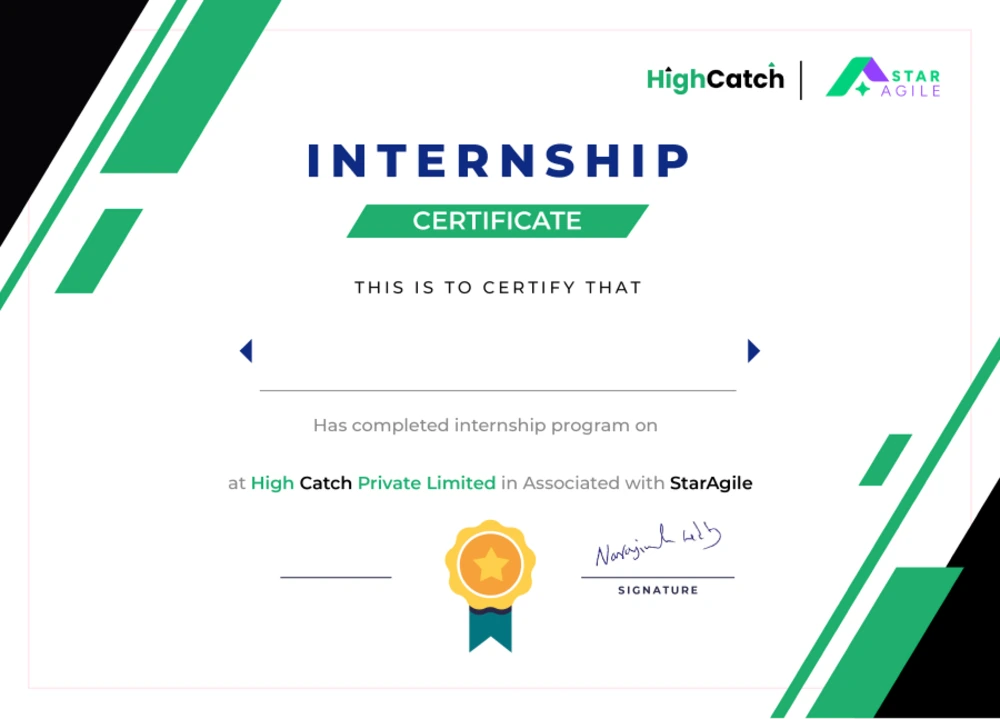
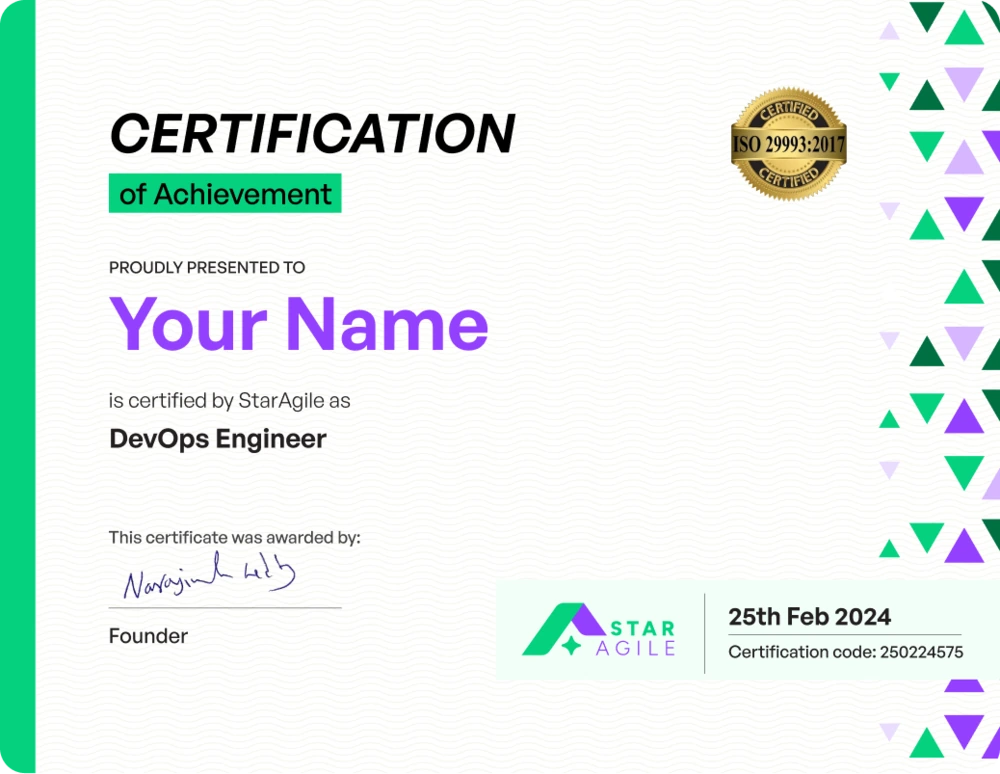
After completing the 4 months of online training, the trainees will get a course completion certificate from StarAgile. The trainees will also get a 4-month internship training certificate. StarAgile offers letter of recommendation to the trainees.
Eligible candidates will receive placement support in resume and profile building, business communication, soft skill training, competency tests, and mock interviews. All these opportunities provided by StarAgile make it the best DevOps training institute.
Topics covered during the DevOps training
1. Digital Infrastructure & Software Engineering Foundations
Builds the base — how software, networks, and APIs work together before diving into DevOps itself.
2. Linux Administration & Basic Shell Automation
Get hands-on with Linux systems and write your first automation scripts using shell commands.
3. Python for DevOps & Infrastructure Automation
Use Python to automate DevOps tasks like log parsing, API integration, and monitoring.
4. Cloud Computing Fundamentals
Understand core cloud concepts — virtualization, storage, security, and shared responsibility.
5. Git, GitHub
Master version control and team collaboration using Git and GitHub workflows.
6. AWS Cloud Infrastructure Engineering
Deep-dive into AWS services — compute, storage, networking, databases, and security.
7. DevOps Lifecycle & CI/CD Engineering
Build automated pipelines using Jenkins, GitHub Actions, and modern deployment strategies.
8. Docker & Container Engineering
Learn to package applications into containers using Docker for consistent deployments.
9. Kubernetes & Cloud Native Engineering
Orchestrate and scale containerized applications using Kubernetes and Helm.
10. Terraform Infrastructure as Code
Provision and manage cloud infrastructure through code instead of manual setup.
11. Configuration Management with Ansible
Automate server configuration and multi-system management using Ansible playbooks.
12. Monitoring, Logging & Observability
Track system health and performance using Prometheus, Grafana, and the ELK Stack.
13. Azure Cloud Infrastructure Engineering
Learn Azure's cloud services — compute, networking, identity, and Kubernetes (AKS).
14. AI for Cloud & DevOps
Apply AI to optimize deployments, monitoring, and cost management in DevOps workflows.
15. Industry Capstone Project Implementation
Apply everything you've learned in a real-world, end-to-end DevOps project.
DevOps Certificates
- Internship Certificate
- Course Certificate
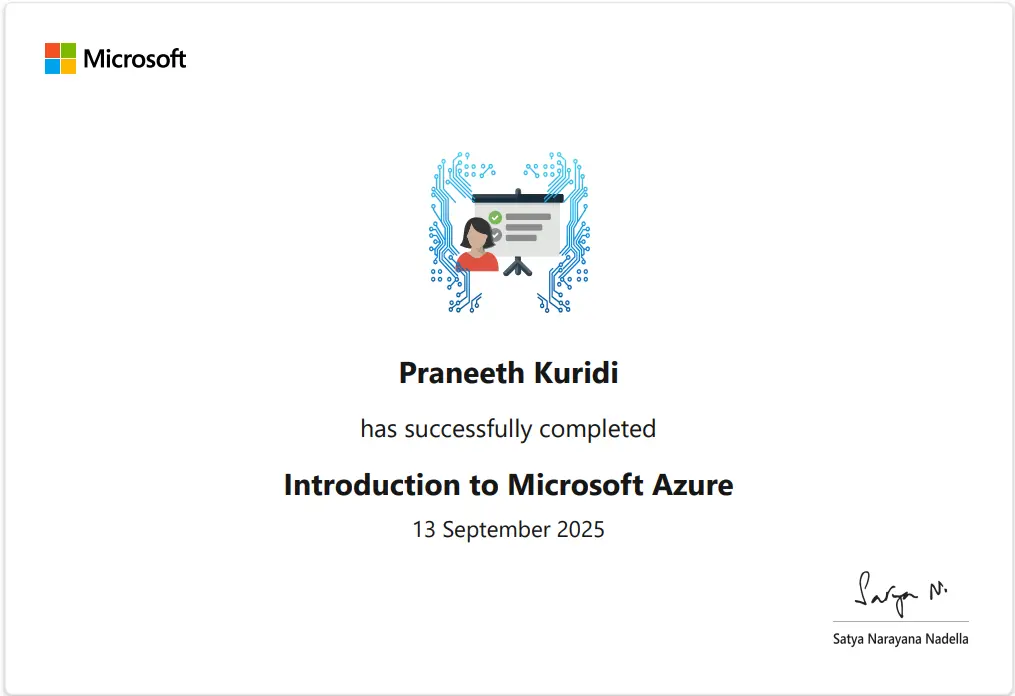
- Microsoft Certificate
Skills Covered
-
Application Development Fundamentals
-
Structured Query Language (SQL)
-
Linux Fundamentals
-
AWS Fundamentals
-
DevOps Overview
-
Managing Source Code – Git and GitHub
-
Understanding and Using Build Tools
-
Continuous Testing with Selenium
-
Continuous Integration Using Jenkins
-
Containerization, Docker, and Docker Hub
-
Configuration Management Using Ansible
-
Container Orchestration Using Kubernetes
-
Monitoring and Logging Using Nagios
-
Infrastructure as Code (IaC) Using Terraform
-
Continuous Deployment Using AWS Services
Tools Covered









Capstone Projects
Course Reviews

 Verified Learner
I recently completed the DevOps certification course from Star Agile, and I must say it was a highly enriching experience. The course was well-structured, covering essential DevOps concepts, tools, and best practices with real-world use cases.
I recently completed my DevOps training at StarAgile, and I must say it was a fantastic learning experience! The course was well-structured, covering all essential DevOps concepts with hands-on practice.
The @StarAgile DevOps course exceeded my expectations! The instructors were expert-level and delivered the content in an engaging way. Hands-on labs and real-world examples made the concepts stick. Highly recommended for anyone looking to level up their DevOps skills! #DevOpsTraining #StarAgile#Training Operations
DevOps trainer taught good content with very understanding approach
"I recently completed my DevOps course with StarAgile, and I'm blown away by the exceptional training experience! The instructors were knowledgeable, supportive, and made complex concepts easy to understand. The course material was well-structured, and the hands-on exercises helped me gain practical skills."
DevOps Certification Course Training FAQs
- Linux fundamentals and shell scripting
- Python for automation and infrastructure scripting
- Git and GitHub for version control
- AWS and Azure cloud fundamentals
- CI/CD pipelines using Jenkins and GitHub Actions
- Containerization with Docker
- Container orchestration using Kubernetes
- Infrastructure as Code (IaC) with Terraform
- Configuration management using Ansible
- Monitoring and logging with Prometheus, Grafana, and ELK
- AI-driven tools for cloud and DevOps automation
- Hands-on capstone projects for real-world experience
After completing the DevOps Certification, you can advance further with:
- AZ-900 or AWS Solutions Architect Associate — entry-level cloud certifications
- AI-Enabled Azure Cloud Masters Program — advanced Azure and AI skills
- AWS Cloud Architect Masters Program — advanced AWS architecture skills
- AI-Native DevOps & Cloud Engineering Certification (IIT Patna) — specialized AI-driven DevOps program
- Cloud Expert Interview Preparation — real-world interview readiness
- Linux & Shell Scripting — Manage systems and automate tasks using Linux commands
- Python for Automation — Write scripts to automate repetitive DevOps tasks
- Git & GitHub — Track code changes and collaborate with teams
- AWS & Azure Cloud Basics — Understand how to host and manage applications on the cloud
- CI/CD Pipelines — Automatically build, test, and deploy code faster
- Docker (Containerization) — Package applications so they run consistently anywhere
- Kubernetes (Orchestration) — Manage and scale multiple containers with ease
- Terraform (Infrastructure as Code) — Set up cloud infrastructure using code instead of manual steps
- Ansible (Configuration Management) — Automate server setup across multiple systems
- Monitoring & Logging — Track system performance and catch issues early
- AI in DevOps — Use AI tools to improve automation and decision-making
StarAgile's DevOps training covers industry-standard tools used by top companies, including:
- Git & GitHub — Version control and team collaboration
- Jenkins — Automating build, test, and deployment pipelines
- Docker — Packaging applications into containers
- Kubernetes — Managing and scaling containerized applications
- Ansible — Automating server configuration
- Terraform — Managing cloud infrastructure through code
- Maven — Automating project builds
- Nagios — Monitoring system performance and uptime
You'll also get hands-on exposure to AWS and Azure cloud platforms, along with Python and shell scripting for automation — giving you practical, job-ready skills.
- The DevOps online training is led by certified trainers with over 15 years of industrial experience.
- Training is given with real-life examples, and experienced trainers simplify complex topics.
- To improve the practical experience, the course includes 3 capstone projects and assignments.
- The eligible trainees can get 2 months of placement training.
- StarAgile offers letters of recommendation.
- Course content includes generative AI.
- Get lifetime access to the course materials and enhance your knowledge in DevOps.
In these following cities DevOps Course Certification Training is available by StarAgile
DevOps Career Roadmap FAQs
- DevOps Engineer
- Site Reliability Engineering
- Cloud Engineer
- Release Manager
- Automation Engineer
- Infrastructure Engineer
Cloud Engineer
Cloud Architect
Cloud Consultant
Cloud Administrator
Cloud Security Specialist
Cloud Software Developer
- Amazon Web Services (AWS)
- Microsoft
- IBM
- Oracle
- Red Hat
- Cisco
- Google Cloud
- Salesforce
- Cisco
- Capgemini
- Alibaba Cloud
- DigitalOcean
- Collaboration and Communication:
- To improve collaboration between development, operations, and quality assurance teams.
- Continuous Integration/Continuous Deployment (CI/CD):
- Designed software and built and maintained pipelines for CI/CD.
- Infrastructure as Code:
- The IaC tool is used to manage infrastructure efficiently.
- Monitoring and Performance Optimization:
- Use monitoring tools to track software and its performance.
- Trains can learn the roles and responsibilities through the DevOps engineer course from the StarAgile.
- Cloud Architecture Design: Develop scalable and secure cloud architectures tailored to business needs.
- Deployment and Migration: Oversee the deployment of applications and services in the cloud environment. Planned and executed the migration of applications and data from on-premises to cloud platforms.
- Infrastructure Management: Use Infrastructure as Code tools for resource provisioning.
- Security and Compliance: Establish security protocols and best practices to protect cloud resource
DevOps Basic FAQs
Non Tech courses provided by StarAgile
Tech courses provided by StarAgile
Automation Testing Course with Placement Assistance
Data Science Course with Placement Assistance
Distinctions and Achievements
DevOps Full Course Details & Requirements
What is DevOps?
DevOps is a way of working that connects software developers and IT operations teams so they can build, test, and release applications more efficiently. By using automation, continuous integration and deployment (CI/CD), and cloud infrastructure, teams eliminate delays caused by manual processes. The result is faster software delivery, fewer production issues, and stronger collaboration across the entire development pipeline.
What will you learn in the DevOps course?
- Cloud Infrastructure & Fundamentals: Master AWS cloud services and Linux operating systems to build a solid foundation for DevOps practices
- Version Control & Collaboration: Learn Git and GitHub for effective source code management and team collaboration.
- Build Automation & CI/CD Pipelines: Implement continuous integration and deployment workflows using Jenkins and automated build tools.
- Containerization & Orchestration: Package applications using Docker and manage containers at scale with Kubernetes
- Configuration Management: Automate infrastructure configuration and management using Ansible
- Infrastructure as Code (IaC): Provision and manage cloud resources programmatically with Terraform
- Continuous Monitoring & Observability: Monitor system performance and application health using Prometheus and Grafana.
- Testing Automation: Integrate automated testing into your DevOps pipeline with Selenium
- Real-World Application: Apply your skills through hands-on capstone projects that simulate production environments.
Prerequisite for DevOps
- There are no specific requirements regarding educational qualifications or experience for the DevOps certification course.
- Anyone from any background can join the training. Even freshers can enroll in the DevOps online training.
- Since the DevOps process requires programming skills and knowledge of any programming language, as well as basic Linux knowledge, these will be an advantage during the training.
Why take a DevOps course?
DevOps has become essential in modern software development, making it one of the most in-demand skill sets in the tech industry. Organizations across all sectors are adopting DevOps practices to accelerate software delivery, improve product quality, and enhance team collaboration. Here's why investing in a DevOps course is a smart career move:
- United States (Glassdoor): Average salary of $141,530 per year, with top earners making up to $217,566 annually.
- United Kingdom (InterviewZilla): £50,000–£75,000 annually, with senior professionals earning £75,000–£100,000.
- Canada (InterviewZilla): CAD 90,000–120,000 annually, while senior roles earn CAD 120,000–150,000.
- Australia (Qubit Labs): Salaries range from AUD 70,594–131,320.
- India (IGMGuru): Average salary is ₹7.75 LPA, with experienced professionals earning ₹12–33 LPA.
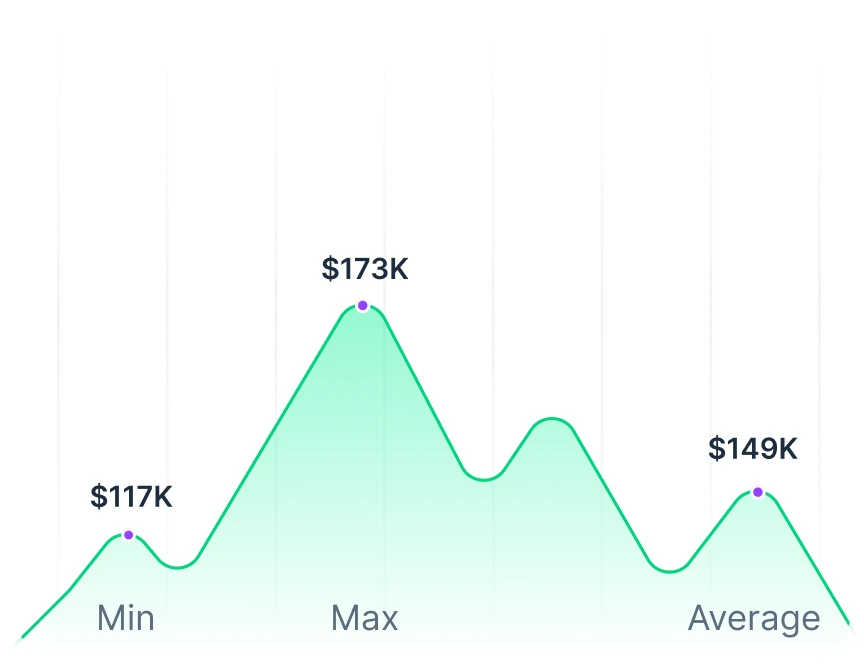
- Global Market (Motion Recruitment, 2025): Mid-level DevOps Engineers earn $122,761–153,809, while senior professionals earn $146,559–173,590 annually.
Business Impact & Benefits
- 61% of organizations say DevOps helped them improve the quality of their deliverables, and 49% reported shorter time to market for software, according to Spacelift
- Teams implementing DevOps practices experience 46 times more frequent code deployments and 96 times faster recovery from failures compared to low-performing teams, according to DevOpsBay
Hands-On Technical Expertise
- A DevOps course provides practical experience with industry-leading tools and technologies like AWS, Docker, Kubernetes, Jenkins, and Terraform. These are the same tools used by top tech companies worldwide, giving you job-ready skills.
Why this DevOps course is best Learning Option:
This DevOps course is the best learning option for students, graduates, and working professionals looking to build a successful IT career. It provides hands-on training in industry-leading tools like Git, Docker, Kubernetes, Jenkins, Ansible, Terraform, Maven and Nagios through real-world projects. With expert mentorship, certification, and placement support, you'll gain the skills employers are actively seeking.
Advance Learning Options
Once you complete the DevOps Certification, you don't have to stop there. StarAgile offers a clear path to help you specialize further and move into higher-paying, more advanced cloud and DevOps roles.
1. AZ-900 or AWS Solutions Architect Associate: Strengthen your cloud fundamentals with a globally recognized entry-level certification in either Azure or AWS.
2. AI-Enabled Azure Cloud Masters Program: Go deeper into Azure with AI-driven tools and workflows designed for modern cloud infrastructure management.
3. AWS Cloud Architect Masters Program: Build advanced skills in designing and managing scalable, secure architectures on AWS.
4. AI-Native DevOps & Cloud Engineering Certification (Vishlesan i Hub, IIT Patna): A specialized, IIT Patna-backed program combining DevOps practices with AI-native cloud engineering skills.
5. Cloud Expert Interview Preparation: Get interview-ready with focused prep sessions covering real-world cloud and DevOps interview questions.
Core Skills Covered
- Application Development Fundamentals — Understand the basics of how applications are built, structured, and deployed.
- Structured Query Language (SQL) — Learn to manage and query databases, a key skill for backend and infrastructure work.
- Linux Fundamentals — Get hands-on with Linux systems, commands, and file management used across DevOps environments.
- AWS Fundamentals — Build a strong foundation in AWS cloud services for hosting and managing applications.
- DevOps Overview — Understand core DevOps principles, lifecycle stages, and how teams collaborate to deliver software faster.
- Managing Source Code – Git and GitHub — Learn version control and team collaboration using Git and GitHub.
- Understanding and Using Build Tools — Explore how build tools like Maven automate compiling and packaging code.
Tools Covered
- Git — Version control for tracking code changes and collaboration.
- Docker — Containerization platform for packaging and running applications.
- Jenkins — Automation server for building CI/CD pipelines.
- Kubernetes — Container orchestration for scaling and managing deployments.
- Ansible — Configuration management and automation tool.
- Terraform — Infrastructure as Code tool for provisioning cloud resources.
- Maven — Build automation tool for managing project dependencies and packaging.
- Nagios — Monitoring tool for tracking system and application performance.
Comprehensive Training Solutions for Enterprises