



SAFe® Scrum Master Certification Training in New York


-
 Curriculum backed and approved by Scaled Agile, Inc.
-
Trusted Gold SPCT Partner of Scaled Agile
-
Earn 16 PDUs and 16 SEUs upon completion
-
Learn directly from certified SAFe Practice Consultants
-
Includes 1-year access to SAFe community platform
-
Training fee covers your certification exam cost
-
Build skills that support key business objectives

SAFe Scrum Master Course in New York – Key Features
-
 2 Days Online / Classroom Training
-
Training by experienced SAFe Practice Consultant
-
SAFe Scrum Master exam fee included
-
One year membership to the SAFe Community Platform
 2 Days Online / Classroom Training
-
Practical Knowledge with Role plays, Games, Case studies & Simulations
-
16 PDUs and SEUs on course completion
-
Detailed courseware approved by Scaled Agile Inc.
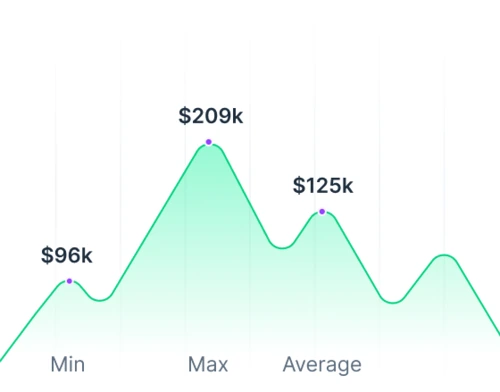
Significant Demand Growth










around the world
SAFe® Scrum Master Course Content in New York
Choose the plan that fits you best!
| Standard Plan | StarX Plan | StarMax Plan | |
|---|---|---|---|
| 16 hours of Interactive training with our experienced and skilled Scrum trainers, ensuring a strong grasp of Scrum fundamentals |

|
|
|
| Earn 16 PDUs & SEUs |
|
|
|
| 1 year membership with SAFe community |
|
|
|
| SAFe Scrum Master certificate |
|
|
|
| Exclusive 6 hours self-paced video course on PMI: Organizational Change Management by Change Management Guru, Jo Peacock |

|
|
|
| Upto 30% off on our advanced scrum courses |
|
|
|
| Exclusive 2. 5 hrs video course on Building A Performance Driven Agile Team from an Industry Leader from an Industry Leader, to lay a solid foundation in leading SAFe principles and have a performance driven Agile team. |
|
|
|
| Exclusive 13 hours video on Agile and Scrum to provide you in depth understanding knowledge of Agile principles and Scrum framework |
|
|
|
| Microsoft certification: Transform business workflows with generative AI certification from StarAgile In Collaboration with Microsoft |
|
|
|
| Exclusive access to a 3-hour video course from best-selling Jira author, Dan LeFebvre on using a non-version of Jira to manage issues, team workflows and more |
|
|
|
| About 6 hours course on 'Complete Agile, Scrum, Kanban, SAFe, Confluence with ChatGPT |
|
|
|
| About 3 hour course on 'SAFe® 6.0-Latest Scaled Agile Framework Complete SAFe Course' |
|
|
|
| 2 high-quality mock exams |
|
|
|
| Additional 2 high-quality mock exams |
|
|
|
| Live 8 hrs training ' AI for Enterprise agilist'/ AI for Scrum Masters once in a month. One of the 2 live trainings |
|
|
|
| 6 Hours Jira Live Virtual Training with 6 PDUs |
|
|
|
| Interview prep assistance - 2 hr live sessions, promotion assistance, Resume building, 2 Mock interviews, Top notch Interview questions to crack for 8 roles of SAFe Scrum Master roles |
|
|
|
| A course on 'Conflict Resolution for Managers' |
|
|
|
| A 11 hours of 'Six Sigma Green belt' self paced course to improve quality and risk managemetn |
|
|
|
| A 2 hour course on 'Leadership in Digital Transformation' |
|
|
|
| A 3 hours course on 'Lean Business Process Management Change Skills' |
|
|
|
| About 7 hour course on 'Enterprise Agile Coaching with SAFe®(Scaled Agile Framework' |
|
|
|
| About 5 hours course on 'Rally Project Mgmt Tool for Enterprise - aligned with SAFe®' |
|
|
|
| About 8 hours course on 'Latest SAFe ® 6.0-Complete Scaled Agile Framework® :In-Depth' |
|
|
|
| A 11 hours of 'Accredited Agile Project Management Foundation (Scrum)' self paced course to improve quality and risk managemetn |
|
|
|
| 1 on 1 mentorship with SPCT - 1 Hr Live session |
|
|
|


Upcoming Batches of SAFe Scrum Master Training in New York

Currently, we don't have any batch scheduled in your region.
You can request a new batch on your preferred date!



The work force is your asset. Up-Skill them with our Corporate Training Programs!
-
Unleash In-Demand Skills Across the Enterprise
-
Align Skill Development with Business Objectives
-
Drive Increased Employee Productivity
-
Leverage Immersive Learning
SSM Certification in New York Overview
Earning an SSM Certification training in New York can be a real turning point for Agile professionals. Here's how:
- Better job opportunities – Certified SAFe Scrum Masters are actively sought after by large-scale organizations running Agile transformations.
- Higher earning potential – Certification typically boosts salary prospects compared to non-certified peers in similar roles.
- Skill development – You build strong expertise in SAFe principles and Scrum practices, helping you guide organizations toward their goals.
- Improved organizational impact – Learn to enhance team communication and efficiency at scale.
- Global recognition – The certification is respected across industries worldwide, opening doors beyond local markets.
- Leadership growth – Develop the ability to facilitate problem-solving and coach cross-functional teams.
What StarAgile Offers in the SSM Course
Choosing the right SSM course in New York matters, and StarAgile brings a well-rounded package:
- Training delivered by experienced SAFe Practice Consultants (SPCs)
- Interactive sessions including role-plays, simulations, and real case studies
- 16 PDUs and SEUs earned upon course completion
- Exam fee included in the training cost
- One-year membership to the SAFe community platform
- Comprehensive study material covering both team-level and program-level Scrum Master responsibilities
Eligibility and Prerequisites
Before enrolling in SSM training in New York, keep these requirements in mind:
- At least 1 year of experience working as a Scrum Master in an Agile environment
- Basic understanding of Scrum, Kanban, and Extreme Programming concepts
- Familiarity with software or hardware development systems is helpful, though not mandatory
- Attending the official SAFe Scrum Master training is required before sitting for the certification exam
With the right eligibility and StarAgile's structured training, professionals can confidently step into scaled Agile roles and strengthen their career trajectory in high-demand markets like New York.
SSM Certificate

SAFe Scrum Master Training in New York – Certification FAQ’s
SSM is an industry-recognized credential, approved by Scaled Agile, Inc., that verifies a professional's ability to guide Agile teams within a SAFe enterprise. Unlike a standard Scrum Master, an SSM works across multiple teams and keeps execution tied to Program Increment goals. Anyone weighing SSM Certification in New York should know it signals readiness to operate at that larger, multi-team scale.
It builds structured skills in coaching, facilitation, and cross-team coordination that go beyond a single sprint. People who complete SSM training in New York often find the material translates directly into practice: running retrospectives that change behavior, keeping Program Increments on track, and mediating disagreements between teams.
Current Scrum Masters, project coordinators moving into Agile roles, team leads eyeing program-level work, and future Release Train Engineers all fit well. A year of Scrum Master experience plus basic Kanban familiarity is a reasonable baseline. Most people evaluating an SSM course in New York already have some hands-on Agile exposure, which makes SSM Certification in New York a natural next step rather than a stretch.
It typically widens job opportunities, strengthens a resume with a globally recognized credential, and supports salary growth. The practical value comes from the coursework itself — SSM Certification training in New York pushes candidates through real scenarios like PI planning and iteration reviews, not just theory. That hands-on grounding is a big reason SSM Certification in New York appeals to working professionals.
An SSM connects individual Scrum teams to the Agile Release Train, keeping local decisions aligned with enterprise priorities. Scrum Masters trained through formal SSM training in New York or elsewhere reduce the guesswork of syncing dozens of teams toward shared Program Increment goals.
Facilitation of team and program events, coaching through powerful questions, backlog refinement, PI Planning execution, conflict resolution, and increasingly, responsible use of AI tools in the Scrum Master role, all reinforced through SSM training in New York.
It shifts a Scrum Master from running ceremonies to actively coaching for outcomes — spotting systemic blockers, driving real decisions, and balancing team needs against program constraints, a shift many trace back to a well-run SSM course in New York.
They demonstrate fluency in SAFe's structure and can coordinate cleanly with Release Train Engineers and Product Managers, which cuts onboarding time and reduces misaligned delivery. This fluency is exactly what structured SSM training in New York is designed to build.
Certified Scrum Masters bring consistent facilitation and backlog discipline, reducing friction during sprints and Program Increments regardless of who fills the role, a result closely tied to completing SSM Certification training in New York.
It covers the mechanics and intent behind stand-ups, sprint planning, backlog refinement, reviews, and PI Planning, so certified professionals can adapt ceremonies rather than run them mechanically — a core focus of any solid SSM course in New York and of broader SSM Certification in New York programs generally.
Technology, banking and financial services, healthcare, consulting, and marketing firms hire most actively, since they run large, interdependent product teams that benefit from scaled coordination.
The servant-leader model emphasizes influence without authority — asking better questions and guiding teams to their own solutions, skills that carry into future Release Train Engineer or coaching roles, and skills that SSM Certification training in New York deliberately practices.
Scrum fundamentals in a SAFe context, full PI Planning cycles, iteration tracking, backlog refinement, Inspect & Adapt facilitation, and DevOps/release support — the practical backbone of SSM Certification in New York.
It teaches structured techniques for surfacing dependencies during PI Planning and resolving conflicts between teams with competing priorities, creating a shared process vocabulary across the organization.
Traditional certification focuses on one team. SSM extends that to program-level coordination — PI Planning, Agile Release Trains, and portfolio alignment — built for environments where several teams must move in sync, which any solid SSM course in New York is built to teach. That distinction is exactly what sets SSM Certification in New York apart from single-team Scrum training.
It embeds Lean-Agile habits like limiting work in progress and using "Measure and Grow" assessments directly into coaching practice, making standardization easier across multiple teams.
Yes — the program-level exposure is a natural bridge to Release Train Engineer, Agile Program Manager, or enterprise coach roles. Many treat SSM Certification training in New York as the first step on a longer path, with SSM Certification in New York serving as the credential that opens that door.
Training focuses on facilitating Inspect & Adapt events so retrospectives lead to real process changes rather than repeated meetings with no follow-through.
Better delivery predictability, fewer cross-team blockers, and faster ramp-up for new Agile teams thanks to a consistent, repeatable coaching approach — the kind of measurable value employers cite when justifying SSM Certification in New York for their teams.
Through powerful questioning and structured conflict-resolution techniques practiced via role-plays and simulations — a big reason hands-on SSM training in New York tends to stick better than self-study, and why SSM Certification in New York is often recommended over purely self-taught prep.
Informal coordination breaks down once an organization runs a dozen or more interdependent teams. SSM gives Scrum Masters the structured PI Planning and portfolio awareness needed at that scale, which is precisely the gap SSM Certification in New York is designed to close.
It's a foundation that later credentials like SAFe Advanced Scrum Master or Release Train Engineer build on directly. Starting with a solid SSM course in New York and layering further scaled-Agile certifications tends to produce the most consistent career growth, with SSM Certification in New York often cited as the strongest starting point.
SAFe Scrum Master Certification in New York – Exam FAQ’s
The SSM exam is a multiple-choice test taken online once the required training is complete. It checks understanding of Scrum within SAFe, PI Planning, team facilitation, and iteration execution rather than open-ended writing or case studies. The format stays consistent across sessions, so candidates preparing for SSM Certification in New York can study with a clear sense of what the test will actually look like on exam day.
The exam consists of 45 multiple-choice questions. These are drawn from across the training curriculum, covering Scrum fundamentals, the Scrum Master's responsibilities at both team and program level, PI Planning mechanics, and iteration tracking.
Candidates are given 90 minutes to answer all 45 questions, which works out to roughly two minutes per question. That's generally enough time for someone who has gone through the full course and completed a few mock tests, though candidates who studied only partially through an SSM training in New York program may find the pace tighter.
To pass, candidates must answer at least 33 of the 45 questions correctly, which comes out to about 73%. There's no partial credit or curve — it's a straightforward accuracy threshold, so consistent understanding across all exam topics matters more than being strong in just one area and weak in others.
Yes, the exam is taken entirely online and is proctored for identity verification and exam integrity. It's a closed-book test, meaning candidates can't reference notes or search for answers mid-exam, and pausing once the test has started isn't permitted. Candidates should treat it like an in-person exam even though it's remote — a point most SSM Certification in New York providers make clear before scheduling.
Most training providers send an exam link to the candidate's registered email shortly after the course wraps up, and candidates can typically schedule the test within days. Someone who finishes an SSM course in New York usually doesn't need to wait long before sitting for the exam, which helps keep the material fresh, and this quick turnaround is a common feature of SSM Certification in New York overall.
The exam draws on Agile and Scrum fundamentals, the Scrum Master's role at both the team and program level, PI Planning from drafting through final review, iteration execution, backlog refinement, and continuous improvement practices like Inspect & Adapt. Questions are framed around how these concepts apply inside a SAFe enterprise specifically, not Agile in a generic sense — exactly the applied focus candidates expect from SSM Certification in New York.
The most reliable approach is attending the full training, reviewing the provided study materials, and working through a couple of mock exams before test day. Revisiting ceremonies and terms that felt unclear during class also helps. Steady review after completing SSM Certification training in New York tends to work far better than last-minute cramming the night before, a lesson most graduates of SSM Certification in New York learn quickly.
Yes, most training programs include mock exams designed to mirror the real test's structure and difficulty. These help candidates get comfortable with question phrasing, practice pacing within the 90-minute window, and identify weak spots early enough to review them before the actual exam.
It's considered moderately challenging, mainly because the closed-book format rules out looking anything up mid-test. Candidates need genuine understanding of SAFe and Scrum concepts rather than the ability to recall isolated facts. Solid preparation through structured SSM Certification in New York training makes a noticeable difference in how manageable the exam feels.
Failing the exam isn't the end of the road — candidates can retake it. Many training providers include a free second attempt within a set window after the course ends, so there's usually no immediate cost to trying again. Paid retakes and short waiting periods typically apply only from the third attempt onward, and this safety net is a standard feature of SSM Certification in New York enrollment.
Yes, retakes are allowed with no hard cap on total attempts. The first two attempts are usually covered within the training fee, while later attempts come with a retake fee and, eventually, a mandatory waiting period between tries, which increases slightly with each additional attempt. This retake policy is consistent across most SSM Certification in New York providers.
Official course materials, the mock exams provided during training, and a focused review of key SAFe concepts like PI Planning and Lean-Agile principles are the core resources. A well-structured SSM training in New York program usually bundles all of this together, so candidates aren't left hunting for prep material on their own.
Results are typically available immediately after the exam is submitted. Candidates who pass generally receive their certification without any extended waiting period, which makes it easy to add the credential to a resume or LinkedIn profile right away — a fast turnaround that makes SSM Certification in New York attractive to career changers.
Yes, the exam leans heavily on applied scenarios rather than pure definitions. Questions often describe a situation a Scrum Master might face — a blocked team, a PI Planning conflict, a stalled retrospective — and ask what the correct response would be, testing judgment as much as memorized terminology.
Lean-Agile concepts like limiting work in progress, optimizing flow, and continuous improvement show up as applied questions rather than textbook recall. Candidates need to understand how these principles play out in a real team setting, not just be able to define them on paper.
Yes. The training itself is compact, usually completed over a couple of days, which makes it realistic to fit around a full-time job. Many working professionals choose weekend batches for their SSM course in New York specifically so preparation doesn't compete with regular work hours, and this flexibility is a major draw of SSM Certification in New York generally.
Rushing through questions without reading scenarios carefully, spending too long on a handful of difficult items, and failing to review flagged questions before submitting are the most common issues. Since pausing isn't allowed, managing the 90-minute window deliberately from the start also matters more than it might seem
Mock tests build familiarity with how questions are phrased and how much time each one realistically takes, which reduces surprises on exam day. They also surface specific weak areas — say, PI Planning details or Lean-Agile terminology — so candidates can target review time more effectively before the real attempt.
By covering facilitation, coaching, PI Planning, and Lean-Agile application in a single test, the exam confirms that a candidate can operate as a Scrum Master at a scaled, multi-team level — not just run a single team's daily stand-up, but coordinate within a broader Agile Release Train.
Passing brings a globally recognized credential, stronger visibility to hiring managers looking for scaled-Agile expertise, and tangible proof of competency beyond years of experience alone. It's often the deciding factor for professionals weighing SSM Certification in New York against simply continuing on-the-job learning without formal validation.
It shows an employer that the holder has been trained and formally tested on real SAFe practices — PI Planning, iteration facilitation, backlog refinement, and Lean-Agile principles — rather than just claiming familiarity with the framework through informal exposure. That combination of structured training and a passed exam is exactly what SSM Certification in New York is meant to prove, and it carries more weight than experience alone.
SAFe Scrum Master Course in New York – Additional FAQ’s
Effective PI Planning starts well before the actual event — with a clear draft plan, visible dependencies, and a well-prepared backlog. During the session, the Scrum Master keeps the room focused, surfaces risks early through structured discussion, and makes sure every team leaves with a committed, realistic plan rather than an aspirational one. This kind of facilitation is a core skill built through SSM Certification in New York and similar programs, since PI Planning is one of the few events where poor facilitation can derail an entire quarter.
Beyond basic facilitation, experienced Scrum Masters lean on powerful questioning to help teams reach their own conclusions, use systems thinking to trace a symptom back to its root cause, and coach at both the individual and team level depending on what's actually needed. They also learn when to step back entirely and let a mature team self-organize, rather than defaulting to constant intervention
Dependency management usually starts during PI Planning, where teams visualize what they need from one another on a program board. From there, the Scrum Master tracks those dependencies through the PI, flags ones at risk of slipping, and coordinates directly with counterparts on other teams to resolve blockers before they cascade. Consistent tracking, not just identification, is what separates well-managed dependencies from ones that quietly derail a Program Increment.
Limiting work in progress, breaking down stories to a consistent, manageable size, and tracking flow metrics like cycle time all help teams deliver more predictably. Scrum Masters also reinforce steady sprint cadences and protect teams from mid-sprint scope changes wherever possible, since unpredictability often traces back to shifting priorities rather than the team's actual capability.
High-performing teams tend to share a few traits: psychological safety, a shared sense of purpose, and enough autonomy to make their own delivery decisions. Scrum Masters build this by protecting teams from unnecessary interruptions, modeling constructive feedback during retrospectives, and celebrating wins in a way that reinforces the behaviors that produced them. Much of this coaching approach is exactly what's covered in structured SSM training in New York and comparable programs.
Useful metrics include sprint predictability, cycle time, team-reported happiness or engagement, and PI objective achievement rates. Velocity is often overused as a comparison metric between teams, so experienced Scrum Masters tend to treat it as an internal planning tool rather than a performance scorecard.
Systemic impediments — things like slow approval chains or conflicting priorities from different departments — usually can't be solved at the team level alone. Scrum Masters address these by escalating clearly to the right stakeholders, documenting patterns of recurring blockers, and working with Release Train Engineers or program leadership to push for structural fixes rather than one-off workarounds.
Common challenges include inconsistent adoption across teams, resistance from middle management used to traditional reporting structures, unclear ownership of cross-team dependencies, and difficulty maintaining a shared cadence across dozens of teams. Organizations that invest in properly trained Scrum Masters — often through SSM Certification training in New York or equivalent programs elsewhere — tend to navigate these growing pains faster than those relying on informal, self-taught Agile practices.
This starts with making sure PI objectives clearly trace back to broader business priorities, not just team-level convenience, an emphasis carried throughout SSM Certification training in New York. Scrum Masters help teams understand the "why" behind their work, connect daily decisions to strategic themes, and flag when a team's backlog seems to be drifting away from what the organization actually needs. This alignment skill is one of the practical outcomes of SSM Certification in New York.
Servant leadership shifts the Scrum Master's role from directing work to removing obstacles and enabling the team to do its best work. At an enterprise level, this style of leadership models the behavior other managers are asked to adopt during a transformation, making it easier for the broader organization to buy into a less hierarchical way of working.
Regular, structured updates — rather than reactive ones only sent when something goes wrong — build stakeholder trust over time, a habit shaped early on by a good SSM course in New York. Scrum Masters also benefit from tailoring communication to each stakeholder's actual concerns, whether that's delivery timelines, budget, or risk, instead of sending the same generic status report to everyone. Communication frameworks like these are a recurring theme in SSM Certification in New York coursework.
Addressing resistance usually starts with understanding its source — whether it's fear of losing control, unfamiliarity with new processes, or past bad experiences with Agile done poorly. From there, small visible wins, transparent communication about what's changing and why, and involving skeptics directly in shaping the transition tend to work better than mandates handed down from above.
Scrum Masters help by pushing for automation of repetitive testing and deployment steps, encouraging smaller and more frequent releases, and coaching teams to treat "done" as genuinely production-ready rather than just code-complete. Close collaboration with DevOps engineers on pipeline health is increasingly considered part of the modern Scrum Master's scope, and is touched on in most SSM Certification in New York curricula.
Overlapping working hours for key ceremonies, consistent use of shared digital boards, and deliberately over-communicating context that co-located teams might pick up informally all help distributed teams stay aligned. Scrum Masters also need to be more intentional about building relationships across time zones, since informal hallway conversations simply don't happen on their own.
Visualizing the full flow of work — not just within a single team, but across the value stream — usually reveals where work piles up. Cumulative flow diagrams and cycle time data are common tools for spotting these bottlenecks, after which the Scrum Master works with the team to address the root cause, whether that's a review step, a handoff, or an external dependency. Diagnosing bottlenecks like this is a practical skill sharpened during SSM Certification in New York training.
Strong SAFe Scrum Masters tend to combine patience with persistence, genuine curiosity about what's really blocking a team, and comfort operating without direct authority. They're also skilled at reading a room during high-stakes events like PI Planning and adjusting their facilitation style on the fly rather than following a rigid script.
Rather than collecting metrics for their own sake, effective Scrum Masters tie specific data points — like cycle time trends or defect escape rates — to concrete retrospective discussions and follow-up actions, a practice modeled in most SSM Certification training in New York sessions. The goal is turning numbers into decisions, not just dashboards nobody revisits. This metrics-to-action discipline is a recurring focus of SSM Certification in New York.
Most SAFe implementations build in dedicated Innovation and Planning (IP) iterations specifically to give teams breathing room for exploration, learning, and technical debt reduction without the pressure of committed delivery. Scrum Masters help protect this time from being quietly absorbed into regular feature work, which is a common failure point in immature SAFe adoptions.
Building flexibility into planning — through techniques like maintaining a lightly-groomed backlog buffer and keeping PI objectives outcome-focused rather than overly prescriptive — gives teams room to absorb change without a full replanning cycle, a skill sharpened by SSM Certification training in New York. Scrum Masters also help teams emotionally reset after a significant pivot, since repeated priority shifts can quietly erode morale if left unaddressed. This kind of adaptability coaching is a focus area within SSM Certification in New York.
Structured self-assessments, like SAFe's "Measure and Grow" approach, give teams and leadership a shared way to track progress over time. Pairing this with peer learning between teams — where a more mature team mentors one that's newer to Agile — tends to accelerate maturity faster than top-down mandates alone.
Individually, Scrum Masters influence business agility by making their own teams faster and more predictable. Collectively, when an organization has many well-trained Scrum Masters applying consistent practices, that consistency compounds into genuine enterprise-level agility — which is exactly the outcome companies are aiming for when they invest in SSM course in New York programs or similar training at scale.
Long-term success usually depends on treating Agile as an ongoing practice rather than a one-time rollout — continuing to invest in Scrum Master development, regularly revisiting whether ceremonies still serve their purpose, and resisting the urge to declare the transformation "done" once initial results look good. Organizations that keep reinforcing skills through structured SSM training in New York and similar refreshers tend to sustain gains longer than those that treat initial SSM Certification in New York as the finish line.
Distinctions and Achievements

About SSM Certification in New York
SSM stands for SAFe Scrum Master, a globally recognized certification offered by Scaled Agile Inc. It validates a professional's ability to facilitate Scrum teams operating within the Scaled Agile Framework (SAFe), a methodology used by large organizations to implement Agile practices across multiple teams and departments. Through SSM Certification training in New York, participants learn to plan and execute Program Increments (PIs), coach teams on Agile principles, remove impediments, and support Agile Release Trains (ARTs). Unlike a standard Scrum Master role, an SSM operates in enterprise-level environments, making this certification highly valuable for professionals aiming to lead Agile transformations in large, complex organizations.
Benefits of SSM Certification in New York
If you're looking to advance your career in Agile project management, enrolling in SSM certification training in New York with StarAgile is one of the smartest moves you can make. StarAgile is a recognized training provider known for delivering practical, industry-relevant Agile and Scrum courses, and their SSM course in New York is designed specifically to help professionals master the SAFe framework while working within Scrum teams in a Scaled Agile environment.
What's Included
When you sign up for SSM training in New York through StarAgile, you get access to:
- Live, instructor-led sessions conducted by certified SAFe practitioners with real-world experience
- Comprehensive study material aligned with the latest SAFe framework updates
- Hands-on exercises, case studies, and simulations that mirror real workplace Agile scenarios
- One free exam attempt included in the course fee, along with exam prep support
- Access to a global community of Agile professionals and SAFe alumni
- Post-training support and doubt-clearing sessions to reinforce your learning
- A globally recognized SAFe Scrum Master (SSM) certification upon successful completion
Career Benefits
Completing this certification opens doors to several career advantages. Certified SAFe Scrum Masters are in high demand across industries like IT, finance, healthcare, and manufacturing, especially in companies transitioning to Scaled Agile practices. The certification not only validates your expertise in facilitating Scrum teams within SAFe but also significantly boosts your earning potential, with certified professionals often commanding higher salaries than their non-certified peers. It also enhances your credibility as a leader capable of managing Agile Release Trains (ARTs) and coordinating across multiple teams.
Whether you're an aspiring Scrum Master or an experienced professional aiming to scale your Agile knowledge, StarAgile's structured, mentor-led approach ensures you gain both the certification and the practical skills needed to thrive in today's Agile-driven workplace.
Comprehensive Training Solutions for Enterprises











People also viewed courses like